Choosing the right water level indicator is crucial for your automatic water pump controller system. The sensor you select determines accuracy, reliability, and longevity of your entire water management setup. Two technologies dominate the market: ultrasonic sensors and float switches.
In this comprehensive guide, we'll compare both technologies to help you make an informed decision for your home or building's water tank system.
Understanding Water Level Sensor Technologies
Before diving into comparisons, let's understand how each water level indicator technology works:
Float Switch Sensors: The Traditional Approach
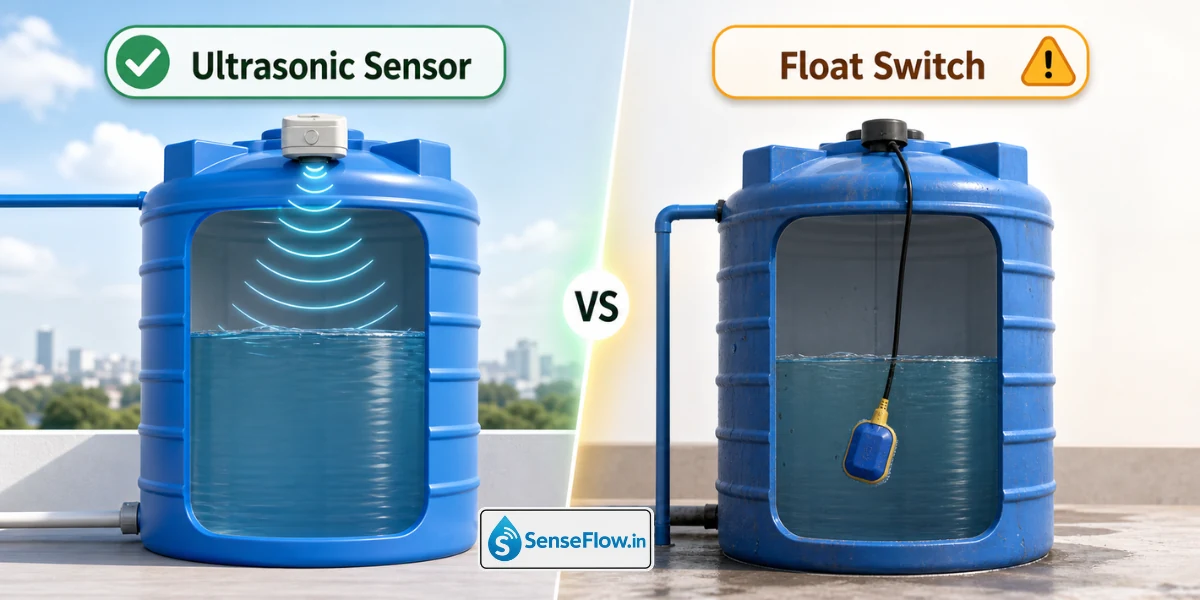
Float switches have been used for decades. They work on a simple mechanical principle:
- A buoyant float rises and falls with water level
- As the float moves, it triggers a mechanical switch
- The switch sends on/off signals to control pumps
- Multiple floats at different heights provide multiple level readings
Common types: Magnetic float switches, mechanical lever floats, and cable float switches.
Ultrasonic Sensors: The Modern Solution
Ultrasonic water level indicators use sound waves to measure distance:
- Sensor emits ultrasonic pulses from above the water
- Sound waves bounce off the water surface
- Sensor calculates distance based on echo time
- Provides continuous, precise level measurements
Key advantage: No contact with water means no wear, no corrosion, no mechanical failures.
Key Difference: Float switches provide discrete level points (empty, half, full), while ultrasonic sensors provide continuous percentage readings (0-100%). This matters for precise tank monitoring and smart water tank alarm systems.
Head-to-Head Comparison
| Feature | Float Switch | Ultrasonic |
|---|---|---|
| Accuracy | Fixed points only (low, medium, high) | Continuous 1-2% accuracy |
| Moving Parts | Yes - prone to wear | None - solid state |
| Water Contact | Submerged in water | Mounted above - no contact |
| Maintenance | Regular cleaning needed | Minimal maintenance |
| Lifespan | 2-5 years typical | 10+ years |
| Installation | Requires tank drilling/access | Simple top mounting |
| Initial Cost | Lower upfront cost | Higher upfront cost |
| Long-term Cost | Higher (replacements) | Lower (durability) |
| Smart Features | Limited (on/off only) | Full app integration |
Why Float Switches Fail: Common Problems
Understanding why traditional float switches fail helps appreciate the benefits of ultrasonic technology:
1. Mechanical Wear
Float switches have moving parts that wear out over time. The hinge mechanisms, magnetic contacts, and float bodies degrade with continuous use. A typical float switch in active use may need replacement every 2-3 years.
2. Debris and Scaling
Being submerged in water exposes float switches to sediment, algae, and mineral scaling. These deposits can:
- Prevent the float from moving freely
- Cause false readings (stuck high or low)
- Jam the mechanical switch mechanism
- Require frequent cleaning and maintenance
3. Corrosion Issues
Metal components in float switches corrode over time, especially in areas with hard water or chlorinated supply. This leads to:
- Electrical contact failures
- Float body leakage (sinking floats)
- Wire deterioration
4. Limited Information
Float switches only tell you "water is above or below this point." For modern automatic water pump controller systems with scheduling, optimization, and smart alerts — especially in areas with unpredictable municipal water timings — this binary information is insufficient.
Real-World Impact: A stuck float switch can cause tank overflow (wasting water and potentially causing damage) or pump dry run (damaging expensive pump motors). Neither scenario is acceptable for reliable water management.
Ultrasonic Sensor Advantages for Water Tank Systems
1. Contactless Operation
Ultrasonic sensors mount at the top of your tank, never touching the water. This eliminates:
- Corrosion from water contact
- Debris accumulation on sensors
- Mechanical failures from water exposure
- Hygiene concerns in potable water tanks
2. Precise Continuous Readings
Instead of just knowing "tank is low" or "tank is full," ultrasonic water level indicators tell you:
- Exact percentage: "Tank is 67% full"
- Liters remaining: "1,340 liters available"
- Fill rate: "Filling at 15 liters/minute"
- Usage patterns: "Average daily consumption: 450 liters"
3. Smart System Integration
Modern ultrasonic sensors enable advanced features:
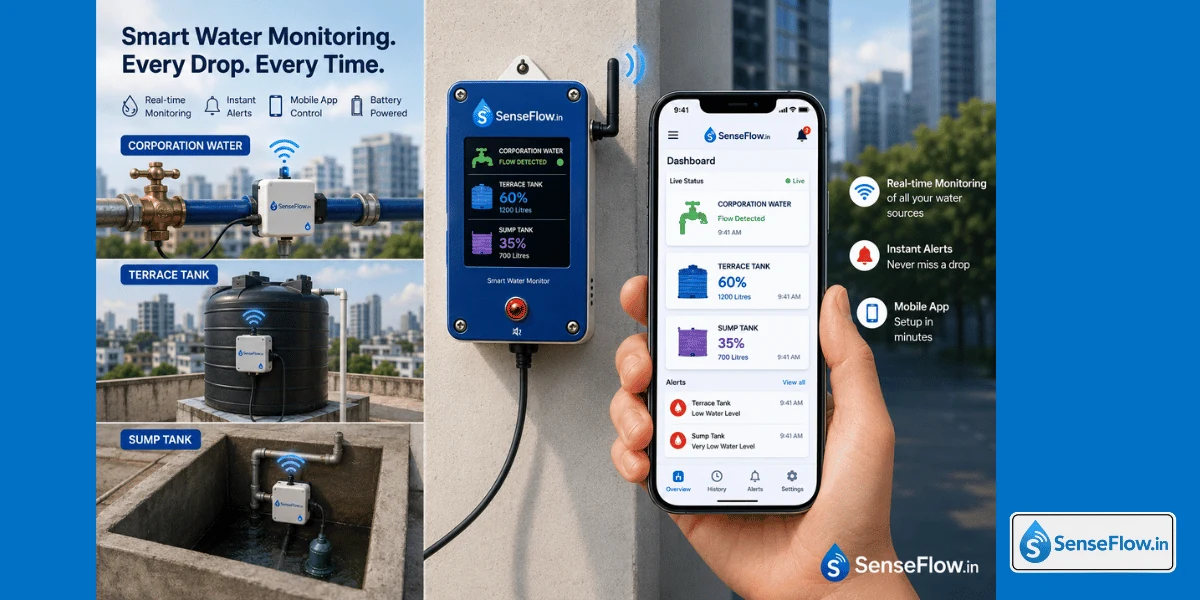
- Mobile app monitoring: Check tank levels from anywhere
- Smart scheduling: Optimize pump operation times
- Customizable alerts: Set specific water tank alarm thresholds
- Usage analytics: Track consumption patterns over time
- Predictive alerts: Know when you'll run low before it happens
4. Long-Term Reliability
With no moving parts and no water contact, ultrasonic sensors typically last 10+ years without degradation. The initial higher cost is offset by:
- No replacement costs
- No maintenance expenses
- No service call fees
- No water damage from sensor failures
When Float Switches Still Make Sense
Despite ultrasonic advantages, float switches may be appropriate for:
- Simple backup systems: As a secondary safety switch
- Tight budgets: When initial cost is the primary constraint
- Temporary installations: Short-term or rental situations
- Industrial sumps: Where regular replacement is already planned
However, for permanent home installations where reliability matters, ultrasonic technology is the clear choice.
Installation Comparison
Float Switch Installation
- Drill holes in tank at desired levels
- Insert float assemblies through openings
- Seal around penetrations (potential leak points)
- Run wiring from each float to controller
- Multiple floats = multiple wiring runs
Ultrasonic Sensor Installation
- Mount sensor bracket on tank lid/top
- Position sensor pointing down at water
- Connect single cable to controller
- Configure via mobile app
- Done - no tank penetration required
Installation Winner: Ultrasonic sensors are significantly easier to install, require no tank modifications, and eliminate potential leak points from drilled holes.
Why SenseFlow Uses Ultrasonic Technology
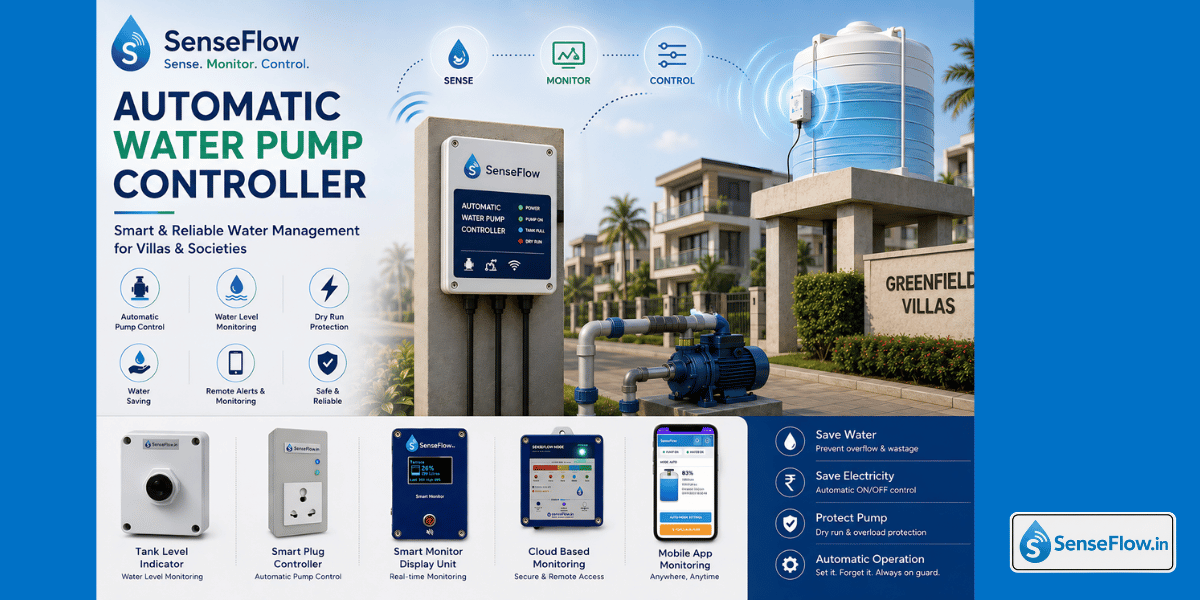
SenseFlow automatic water pump controllers and wireless water level indicators use advanced ultrasonic sensors because our customers deserve the best:
- AquaLevel Ultrasonic Sensor: Our precision sensor provides accurate readings without touching water - no corrosion, no maintenance, no failures
- Continuous Monitoring: Know your exact tank percentage (0-100%) at any time through the SenseFlow app
- Smart Water Tank Alarm: Set custom alert thresholds - get notified at 20%, 50%, or any level you choose
- 10+ Year Lifespan: Our sensors are built to last without degradation or replacement needs
- Easy Installation: Mount on top of any tank - no drilling, no modifications, no leak risks
- Works with All Tanks: Plastic tanks, concrete tanks, underground tanks - universal compatibility
- SenseFlow Monitoring: For those who want tank monitoring and water tank alarm without pump control - perfect standalone solution
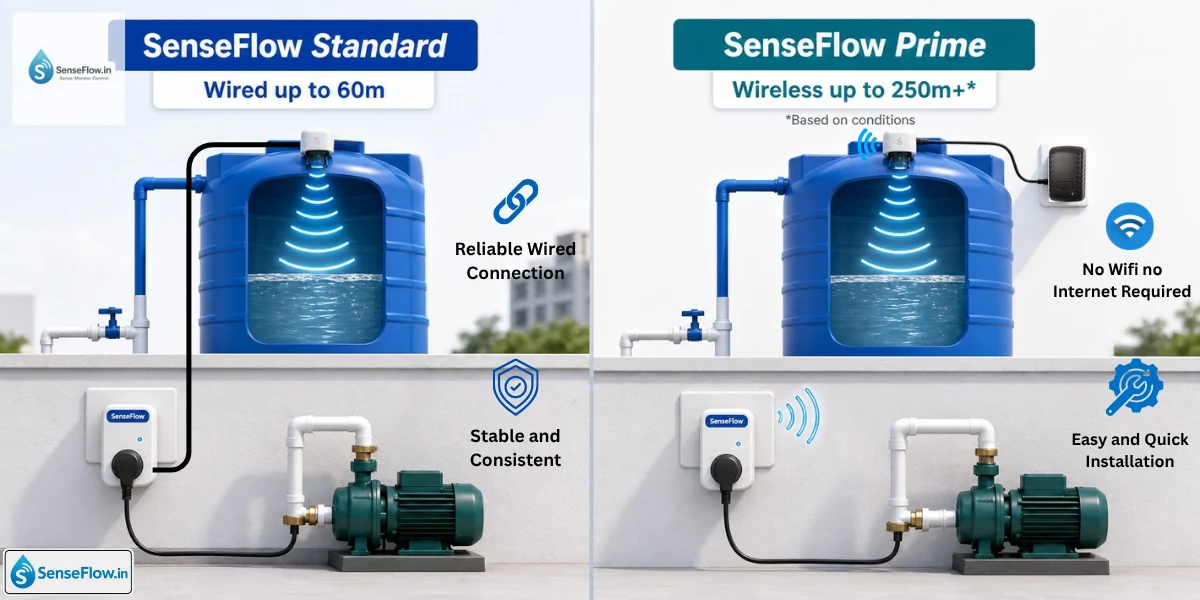
The Choice is Clear: Whether you choose SenseFlow Standard, SenseFlow Prime, or SenseFlow Monitoring, you get the reliability and precision of ultrasonic technology - not outdated float switches.
Making Your Decision
When choosing between ultrasonic and float switch water level indicators, consider:
Choose Ultrasonic If:
- You want reliable, long-term operation
- Precise level readings matter to you
- You want mobile app monitoring and smart features
- You prefer minimal maintenance
- Your automatic water pump controller needs accurate data
- You value total cost of ownership over initial price
Choose Float Switch If:
- Budget is extremely tight
- Installation is temporary
- You only need basic on/off control
- Regular maintenance is already planned
Experience Ultrasonic Precision
Upgrade to SenseFlow's ultrasonic water level indicators. Accurate, reliable, and maintenance-free water tank monitoring.
Explore SenseFlow ProductsFrequently Asked Questions
Can ultrasonic sensors work with any tank shape?
Yes. Ultrasonic water level indicators work with round, square, rectangular, and irregular tank shapes. The sensor measures distance to the water surface regardless of tank geometry.
What about foam or turbulent water?
Quality ultrasonic sensors like those in SenseFlow products use advanced signal processing to handle minor surface disturbances. For extremely turbulent conditions, a stilling tube can be used.
Do ultrasonic sensors need calibration?
Initial setup requires entering your tank height, which takes seconds in the mobile app. After that, no ongoing calibration is needed - the sensor automatically provides accurate readings.
What happens if the sensor gets dirty?
Since ultrasonic sensors mount above the water, they rarely get dirty. If dust accumulates over years, a simple wipe with a cloth restores full function - no tools or expertise needed.
Are ultrasonic sensors affected by temperature?
Quality sensors include temperature compensation to maintain accuracy across normal operating conditions. SenseFlow sensors work reliably from 0°C to 50°C.
Conclusion: The Clear Winner
For modern automatic water pump controller systems and water tank alarm applications, ultrasonic sensors are the superior choice. While float switches served their purpose for decades, technology has moved on.
Ultrasonic water level indicators offer:
- Better accuracy and continuous readings
- Longer lifespan with zero maintenance
- Easier installation without tank modifications
- Smart features for modern water management
- Lower total cost of ownership
The question isn't whether ultrasonic is better - it clearly is. The question is whether you're ready to upgrade your water management to modern standards.