Running downstairs to switch off the motor — only to find the tank overflowed an hour ago — is a familiar frustration for millions of households. Automatic water pump controllers solve this problem completely. This guide explains how they work, the types of sensors they use, and how to choose the right one for your home.
What Is an Automatic Water Pump Controller?
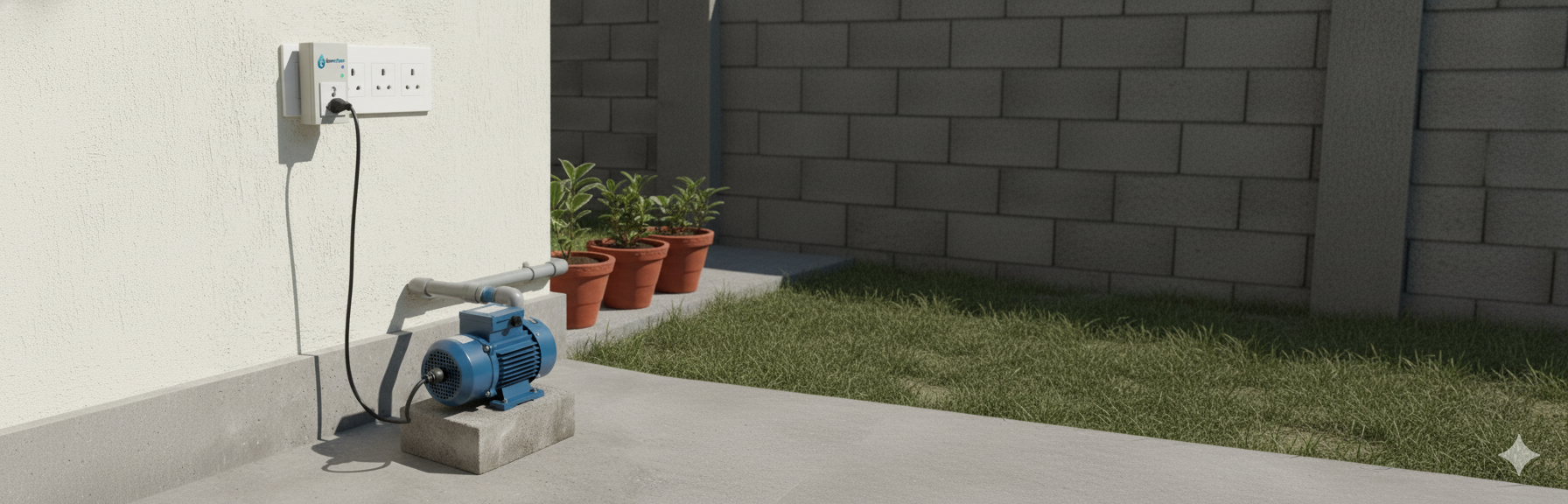
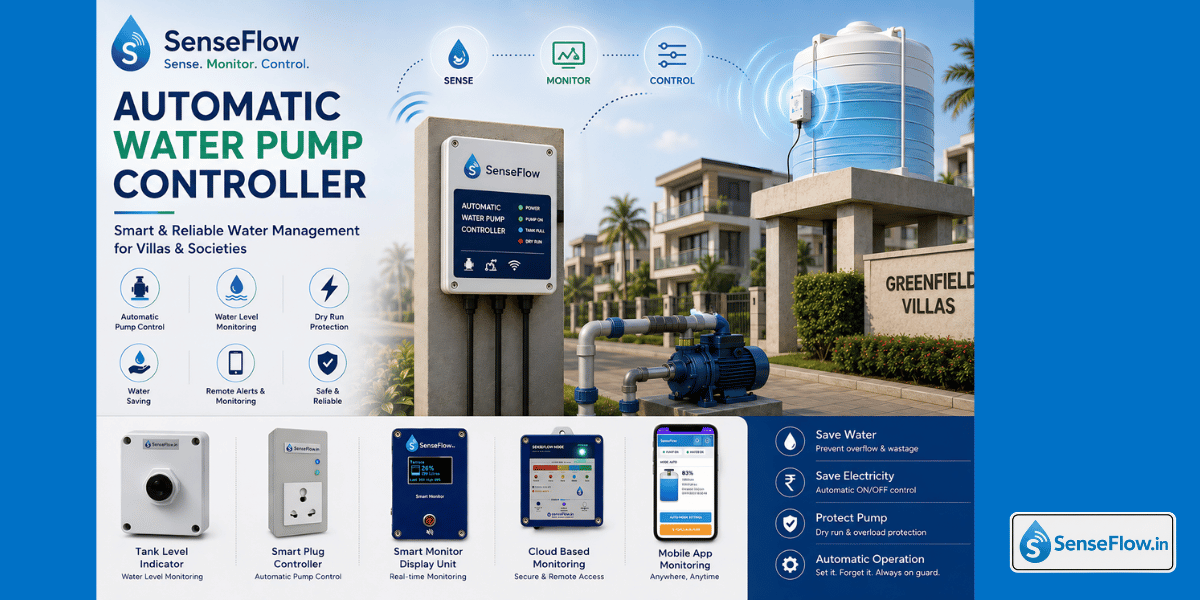
An automatic water pump controller is an electronic device that starts and stops your water pump on its own — based on water levels in your tank or sump. It uses sensors to detect when the tank is empty or full and triggers the motor accordingly.
You no longer need to manually switch the pump on or off. The controller does it for you, 24/7.
These devices are also called water level controllers or automatic tank filling systems, and they are widely used in homes, apartments, offices, and commercial buildings.
How Does an Automatic Water Pump Controller Work?
The system works in three simple steps:
- Sensing — Ultrasonic, water-immersed brass/carbon sensors at different water tank heights, or float sensors monitor the water level in your overhead tank and underground sump.
- Processing — The controller reads the sensor signals and decides whether to start or stop the pump.
- Acting — It sends a command to the motor starter or relay to turn the pump on or off.
Common Trigger Conditions
| Condition | Controller Action |
|---|---|
| Overhead tank is empty + Sump has water | Pump ON |
| Overhead tank is full | Pump OFF |
| Sump is dry | Pump OFF (dry-run protection) |
| Power restored after outage | Auto-restart |
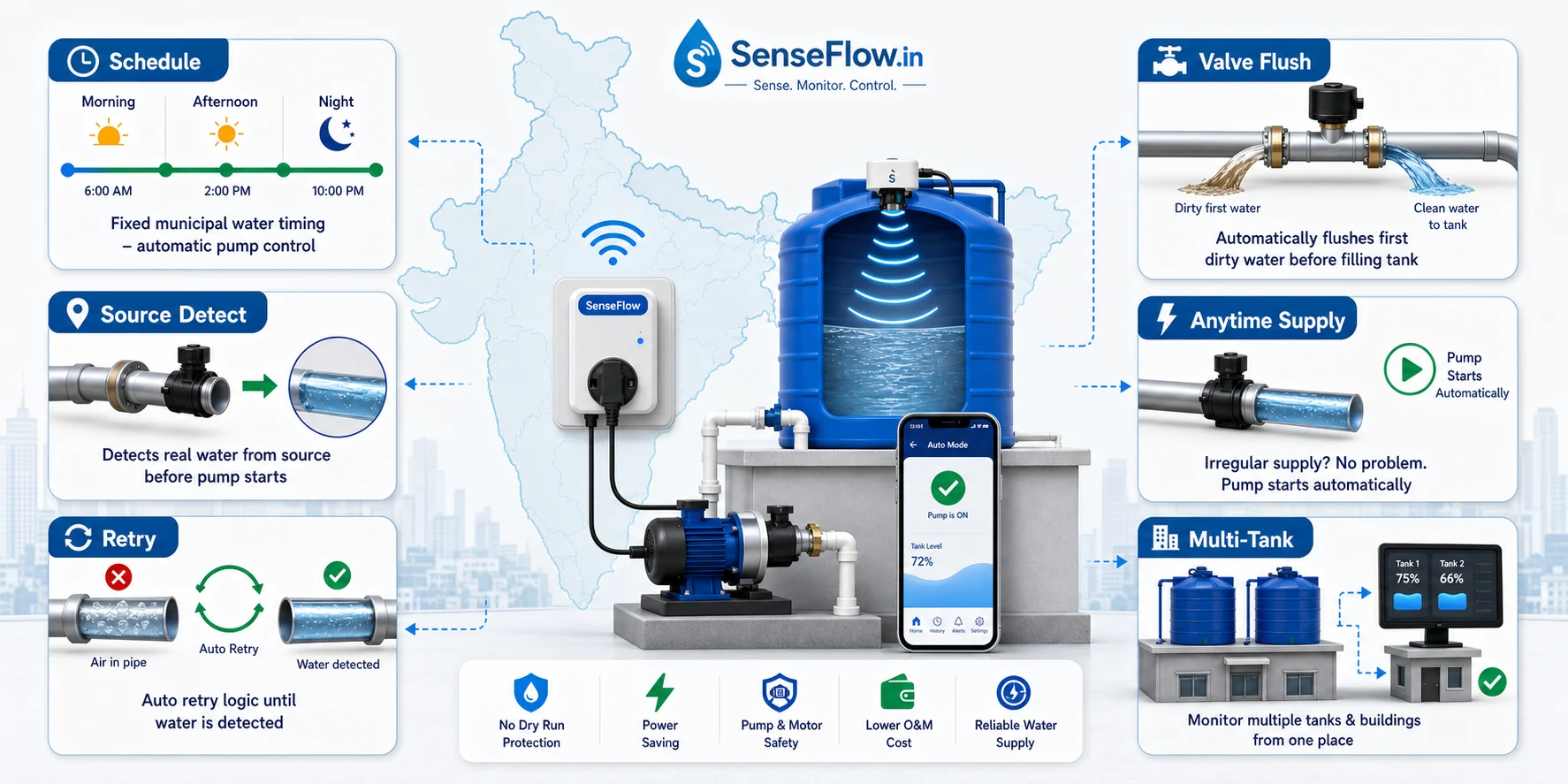
Advanced smart water pump controllers use Wi-Fi to send alerts to your phone and let you monitor or force-control the pump remotely. For setups that only need tank level monitoring and alarms without pump control, dedicated monitoring devices are also available.
Benefits of Automatic Water Pump Controllers
Here is why homeowners and property managers are switching to automatic systems:
- Saves water — No more tank overflow. The pump stops the moment the tank is full.
- Saves electricity — The motor runs only when needed, reducing power consumption by 20–40%.
- Prevents dry running — The controller shuts off the pump if the sump runs dry, protecting the motor from damage.
- Reduces manual effort — No need to monitor water levels manually.
- Extends motor life — Fewer unnecessary starts and stops mean less wear on your pump.
- Works during power cuts — Most models resume normal operation automatically when power is restored.
For households dependent on scheduled water supply, automatic tank filling systems ensure you capture every drop without wasting any. This is especially valuable for areas with irregular municipal water supply timings.
Looking for a Reliable Automatic Controller?
Get a customised solution based on your tank type, motor capacity, and home setup.
Types of Sensors — From Best to Basic
The sensor is the heart of any automatic pump controller. Here are the three main types, ranked by performance and reliability:
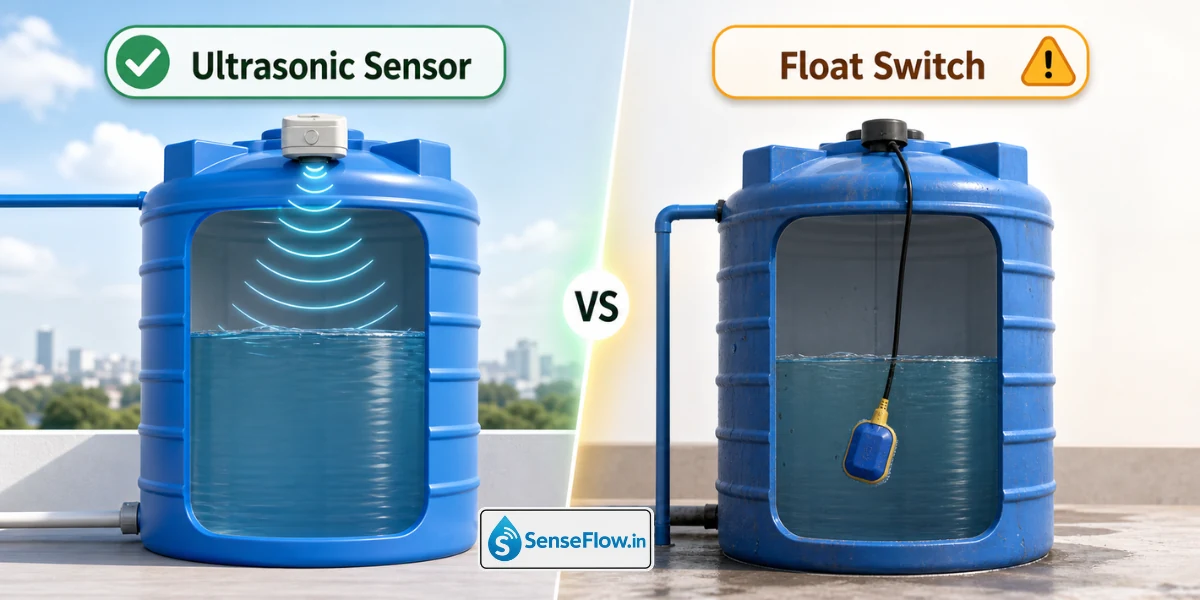
🥇 Ultrasonic Sensors — The Best Choice
Ultrasonic sensors use sound waves to measure water level without ever touching the water. This is the most advanced and reliable sensing technology available today.
- Zero maintenance — No contact with water, no corrosion, no cleaning required
- 10+ year lifespan — No moving parts, no wear and tear
- Highest accuracy — Precise level detection in centimetres
- Works with any tank — Plastic, cement, underground, overhead, any shape
- Hygienic — Never contaminates your drinking water
SenseFlow uses ultrasonic technology across all its products — Standard, Prime, and Monitor.
🥈 Water-Immersed DIP Sensors — Good Mid-Range Option
DIP sensors (also called electrode or probe sensors) use brass or carbon probes placed at different water heights inside the tank. They detect water through electrical conductivity. Reliable, but require periodic maintenance.
- Reliable performance — Well-proven technology
- Requires cleaning every 6 months — Mineral deposits cause false readings
- Affected by hard water — Scale buildup reduces accuracy over time
- Lower cost — More affordable than ultrasonic systems
SenseFlow also offers DIP sensor-based controllers as a budget-friendly option for customers who prefer this technology.
🥉 Float Sensors — Basic, With Limitations
The oldest type — a mechanical float that rises and falls with the water level, triggering a switch at the top and bottom. Cheap but prone to failure.
- Mechanical wear and tear — Moving parts degrade over time
- Can get stuck — Debris, calcium deposits, or tangled wires cause failures
- Frequent maintenance needed — Often the first thing to fail in a setup
- Only detects two points — Cannot measure precise levels in between
- Lifespan: 2–3 years — Much shorter than ultrasonic
Want to dive deeper? Read our detailed comparison: Ultrasonic vs Float Switch: Which Water Level Indicator is Best?
Connectivity Options
Beyond the sensor, modern controllers offer different ways for you to monitor and control your pump:
Offline Mode — No Internet, No WiFi Router
SenseFlow devices connect directly to your Android app without any WiFi router or internet — perfect for remote villages or any location with limited connectivity. View tank levels and control your pump straight from your mobile.
WiFi / Cloud Mode (Optional)
Connect SenseFlow to your home WiFi router to send data to the cloud. Check your tank status and control your pump from anywhere in the world — even when you're away from home.
Both modes are supported by SenseFlow. Want to understand wired vs wireless sensor connectivity? Read our guide: Wireless vs Wired Controllers.
Installation Tips and Best Practices
Installing a water level controller is manageable for most homeowners, but a licensed electrician is recommended for safety.
Key Installation Steps
- Mount the controller unit near your electrical panel or motor starter.
- Install sensors at the appropriate levels in the overhead tank and optional ground tank, sump, or source pipe.
- Wire the sensors to the controller unit using the supplied cables.
- Connect the controller to the motor starter or pump switch.
- Test the system by simulating low and high water levels.
Best Practices
- Use waterproof sensor cables and connectors, especially for outdoor tanks.
- Keep sensor cables away from high-voltage wiring to avoid interference.
- Choose a controller rated for your pump's HP to avoid overloading.
- Opt for models with a manual override switch for emergencies.
- If using ultrasonic sensors, no cleaning needed. For DIP sensors, schedule cleaning every 6 months.
How to Choose the Right Controller
When selecting an automatic water pump controller, consider:
- Sensor type — Ultrasonic for zero maintenance, DIP for budget, float only if cost is critical
- Tank setup — Single or dual tank (overhead + sump)
- Motor capacity — Match the controller to your pump's HP rating
- Smart features — App control, scheduling, dry-run protection, alerts
- Warranty — At least 1 year is standard
- Service & support — Local service network and customer support quality
Every home is different. Tank height, distance from pump, water source, and motor capacity all influence the right choice. That's why getting a customised recommendation matters more than picking a generic model.
Not Sure Which Controller Fits Your Setup?
Share your setup details and our team will recommend the right SenseFlow solution.
Frequently Asked Questions
What is the purpose of an automatic water pump controller?
An automatic water pump controller starts and stops your water pump based on tank water levels. It prevents overflow, protects against dry running, and eliminates the need for manual monitoring.
Can I install a water pump controller myself?
Basic models can be self-installed if you have some electrical knowledge. However, professional installation by a licensed electrician is recommended for safety and to avoid voiding the warranty.
What is a Wi-Fi water pump controller?
A Wi-Fi water pump controller connects to your home network and allows you to monitor water levels and control the pump remotely through a smartphone app. It can also send alerts for overflow, dry sump, or power failures.
How long do water pump controllers last?
Most quality controllers last 5 to 10 years with minimal maintenance. Regular cleaning of sensors and periodic checks of wiring can extend their lifespan significantly. Ultrasonic-based systems typically last the longest.
What is the difference between a water level controller and an automatic tank filling system?
They refer to the same concept. A water level controller is the device itself; "automatic tank filling system" describes the complete setup — including sensors, wiring, and the controller — that automates the entire tank-filling process.
Which type of sensor is best for a home water tank?
Ultrasonic sensors are the best choice for most homes — they require zero maintenance, last 10+ years, and never touch the water. Water-immersed DIP sensors are a good mid-range option but need cleaning every 6 months. Float sensors are basic but have mechanical wear and tear over time.
Does a water pump controller save electricity?
Yes. By running the pump only when needed and preventing unnecessary cycles, a controller can reduce motor electricity consumption by 20 to 40 percent in typical household setups.
Can a single controller manage multiple tanks?
Yes. Modern controllers can manage overhead and underground tanks simultaneously. Advanced systems can also support multi-tank or multi-wing setups, which is common in housing societies and commercial buildings.
Conclusion
An automatic water pump controller is one of the most practical upgrades you can make to your home's water system. It saves water, cuts electricity bills, protects your motor, and removes a daily chore from your routine.
Whether you choose a basic probe-based model or a full smart water pump controller with ultrasonic sensors and app alerts, the investment pays for itself within months.
Ready to automate your water supply? A reliable controller matched to your setup will run trouble-free for years.
Get Started with SenseFlow
Tell us about your setup and we'll recommend the right solution.