When choosing an automatic water pump controller, one of the most important decisions is whether to go wireless or wired. Both options have their place, and the right choice depends on your specific situation, home layout, and preferences.
In this guide, we'll compare wireless water level indicators with traditional wired systems to help you make an informed decision for your water management needs.
Understanding the Two Approaches
Wired Water Pump Controllers
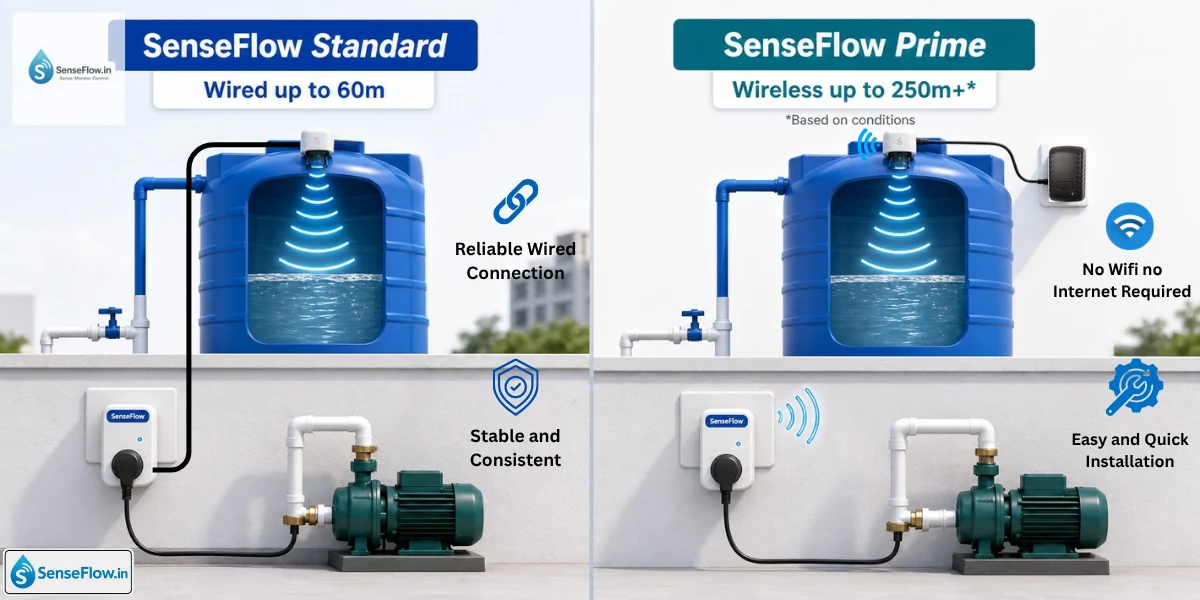
Traditional wired systems connect the water level sensor to the controller unit using physical cables. The sensor in the tank sends signals through wires to the main unit, which then controls your pump.
How it works:
- Sensor mounted in/on the water tank
- Cables run from sensor to controller unit
- Controller connected to pump power supply
- Signals travel through physical wires
Wireless Water Level Indicators
Modern wireless water level indicator systems use radio frequency (RF) communication to transmit data from the sensor to the controller without physical cables.
How it works:
- Sensor mounted on the water tank
- Sensor transmits data wirelessly to controller
- Controller receives signals and controls pump
- No cables between tank and controller
Key Insight: The "wireless" in wireless water level indicator refers to the connection between sensor and controller - not internet connectivity. Both wireless and wired systems can work completely offline without internet.
Detailed Comparison
| Feature | Wired Controller | Wireless Controller |
|---|---|---|
| Installation Complexity | Cable routing required | Simple mounting, no cables |
| Installation Time | 2-4 hours typical | 30-60 minutes typical |
| Distance Flexibility | Limited by cable length | Works across long distances |
| Multiple Tanks | Separate cables for each | Add sensors wirelessly |
| Aesthetics | Visible cables | Clean, cable-free look |
| Signal Reliability | No interference | Rare interference possible |
| Maintenance | Cable checks needed | Minimal maintenance |
| Sensor Power | Powered via cable | Battery (long-life) |
| Initial Cost | Generally lower | Slightly higher |
| Total Installation Cost | Higher (labor intensive) | Lower (easy DIY) |
Advantages of Wireless Water Level Indicators
1. Effortless Installation
The biggest advantage of a wireless water level indicator is installation simplicity. No need to:
- Run cables through walls or ceilings
- Drill holes for cable routing
- Deal with cable conduits or protection
- Hire electricians for complex routing
Most homeowners can install a wireless system in under an hour with basic tools.
2. Perfect for Difficult Layouts
Wireless systems shine in situations where wiring is problematic:
- Underground tanks: No need to dig trenches for cables
- Distant tanks: Rooftop tanks far from pump location
- Multi-story buildings: No cables running between floors
- Rental properties: No permanent modifications needed
- Existing construction: No breaking walls to run cables
3. Easy Expansion
Adding a second tank or monitoring point is simple with wireless:
- Just add another wireless sensor
- Pair it with your existing controller
- No additional cabling required
- Monitor multiple tanks from one app
4. Cleaner Aesthetics
No visible cables running across walls, roofs, or building exteriors. The wireless water level indicator and controller are discrete, standalone units that blend into their environment.
5. Relocation Flexibility
Moving the sensor or controller? With wireless, simply unmount and remount. No cable considerations, no rewiring, no fuss.
Wireless Pros
- Quick, easy installation
- No cable routing headaches
- Works across any distance
- Clean, professional look
- Easy to add more sensors
- Simple relocation
- DIY-friendly
Wireless Cons
- Sensor needs batteries
- Rare signal interference
- Slightly higher initial cost
Advantages of Wired Controllers
1. No Battery Replacement
Wired sensors receive power through the cable, eliminating battery concerns. However, modern wireless sensors have 2-5 year battery life, making this less of an issue.
2. Zero Signal Concerns
Physical wires guarantee signal delivery. No potential for interference from other electronic devices. Though quality wireless systems rarely face interference issues.
3. Lower Initial Price Point
Wired systems often cost less upfront. However, when you factor in installation labor and materials (cables, conduits, clips), total cost often exceeds wireless.
Wired Pros
- No batteries needed
- Guaranteed signal path
- Lower upfront cost
- Familiar technology
Wired Cons
- Complex installation
- Cable routing challenges
- Difficult for long distances
- Cables can degrade
- Permanent modifications
- Professional installation often needed
Real-World Scenarios
Scenario 1: Rooftop Tank, Ground Floor Pump
Challenge: Tank is 3 floors above the pump location.
Wired solution: Run cables down through the building - through walls, ceilings, and potentially outside. Requires drilling, conduits, and likely professional installation.
Wireless solution: Mount the wireless water level indicator sensor on the rooftop tank. Place controller near the pump. Done in 30 minutes.
Winner: Wireless - by a significant margin.
Scenario 2: Underground Sump + Overhead Tank
Challenge: Monitor two tanks at completely different locations.
Wired solution: Two separate cable runs from vastly different locations to one controller. Extremely complex.
Wireless solution: Two wireless sensors, one controller. Both tanks monitored seamlessly through the app.
Winner: Wireless - dramatically simpler.
Scenario 3: New Construction with Pre-Planned Conduits
Challenge: Building is being constructed with dedicated cable paths.
Wired solution: Install cables during construction phase. Clean integration.
Wireless solution: Still simple installation, no conduits needed.
Winner: Either works well - wired is viable here.
Scenario 4: Rental Apartment
Challenge: Cannot make permanent modifications to the property.
Wired solution: Surface-mounted cables (ugly) or no installation possible.
Wireless solution: Mount sensor, place controller, done. Remove when moving out.
Winner: Wireless - the only practical option.
The Pattern: In the vast majority of real-world situations, wireless water level indicators offer easier installation, lower total cost, and more flexibility. Wired systems only make sense in specific scenarios where pre-planned cable routing exists.
Addressing Common Wireless Concerns
"What about battery life?"
Modern wireless sensors use ultra-low-power designs. SenseFlow wireless sensors, for example, last 2-5 years on standard batteries. When replacement is needed, it takes 2 minutes. Compare this to potentially replacing degraded cables every few years.
"Will there be interference?"
Quality wireless systems use dedicated frequencies and protocols designed to avoid interference. In thousands of installations, signal issues are extremely rare. If your WiFi works at home, wireless tank sensors will work too.
"What if the signal can't reach?"
Modern wireless water level indicators have impressive range - often 100+ meters in open air. Even through walls and floors, 30-50 meters is typical. For most homes, this is more than sufficient.
"Is wireless less reliable?"
Actually, wireless can be MORE reliable. No cables to degrade, no connections to corrode, no rodents chewing through wires. The sensor and controller are sealed units designed for years of trouble-free operation.
SenseFlow: Best of Both Worlds
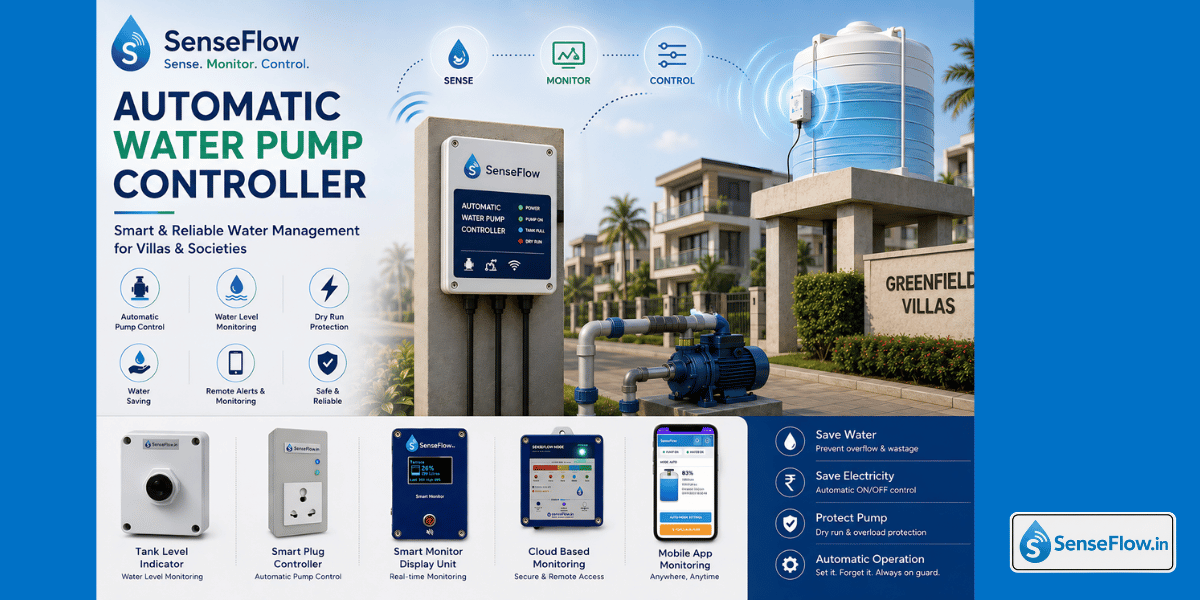
SenseFlow offers both wireless and wired automatic water pump controller options to match your specific needs:
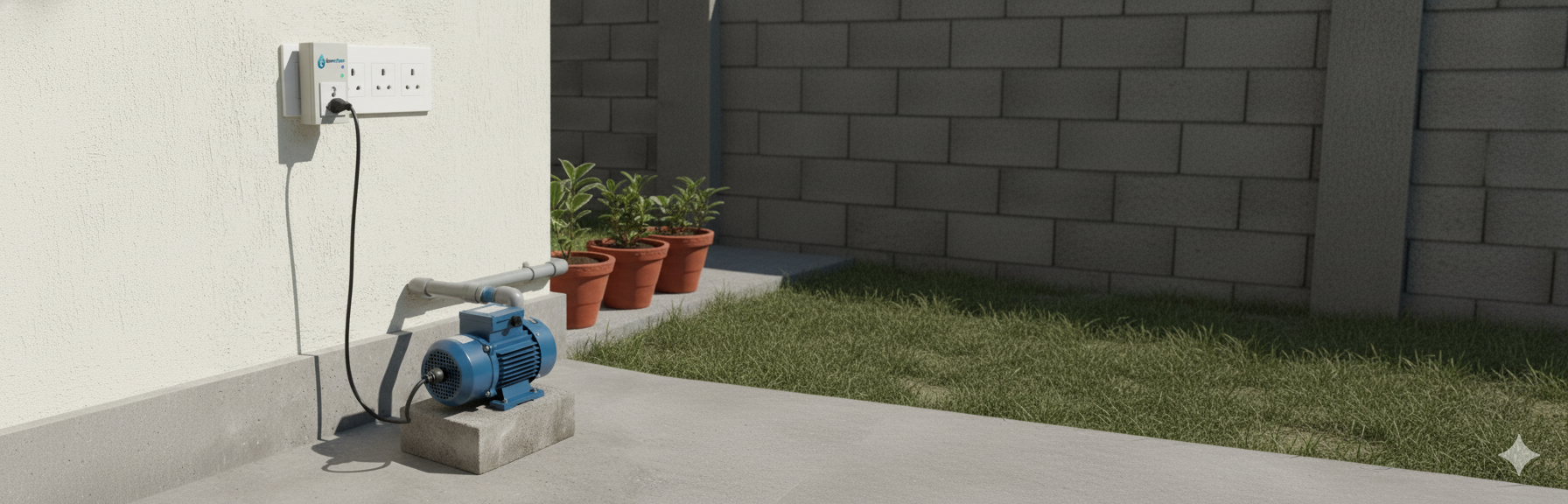
- SenseFlow Prime (Wireless): Our flagship wireless water level indicator with SmartPlug for pump control - zero wiring, instant setup, perfect for most homes
- SenseFlow Standard (Wired): Traditional wired connection for those who prefer hardwired reliability - same smart features, cable-based sensor connection
- SenseFlow Monitoring (Wireless): Pure monitoring solution with water tank alarm - no pump control, just smart tank monitoring with alerts
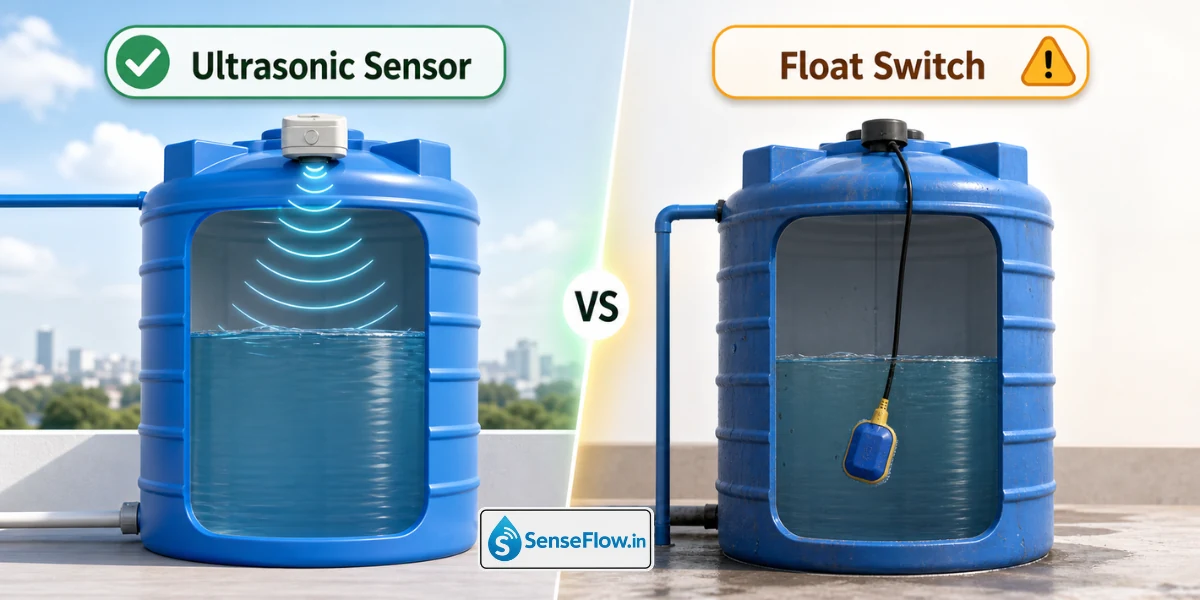
- Ultrasonic Sensors: Both wireless and wired versions use the same precision ultrasonic technology - no float switches
- Same Mobile App: Whether you choose wireless or wired, enjoy the same full-featured SenseFlow app for monitoring and control
- Works Without Internet: Both options operate automatically 24/7 without requiring internet connectivity
- Easy Expansion: Start with one product, add more sensors or controllers as needed
Our Recommendation: For most homeowners, SenseFlow Prime (wireless) offers the best combination of easy installation, flexibility, and smart features. SenseFlow Standard (wired) is ideal when pre-existing cable routing is available or if you specifically prefer wired connections.
Making Your Decision
Choose Wireless If:
- You want easy DIY installation
- Your tank is far from the pump location
- Running cables would be difficult or unsightly
- You're in a rental or don't want permanent modifications
- You might need to monitor multiple tanks
- You want a clean, professional appearance
- You value flexibility and easy relocation
Choose Wired If:
- Pre-planned cable routes already exist
- You strongly prefer wired connections philosophically
- The distance is very short (under 5 meters)
- You're doing new construction with dedicated conduits
Find Your Perfect Controller
Whether you prefer wireless convenience or wired reliability, SenseFlow has the right automatic water pump controller for you.
Compare SenseFlow ProductsFrequently Asked Questions
Can I switch from wired to wireless later?
Yes! If you start with a wired system and later want wireless, you can add a wireless water level indicator sensor to your setup. Many customers upgrade to wireless for the added convenience.
Does wireless work through concrete walls?
Yes, modern wireless systems work through multiple concrete walls and floors. Range may be reduced compared to open air, but 20-40 meters through typical building materials is normal.
What happens if wireless batteries die?
The system alerts you well in advance when batteries are low. Replacement takes 2 minutes. During the brief replacement window, automatic pump control continues based on last known levels.
Is wireless more expensive to operate?
No. The only ongoing cost is battery replacement every 2-5 years - typically under Rs. 200. Wired systems may need cable maintenance or replacement over similar timeframes.
Can I use wireless sensors with a wired controller?
SenseFlow products are designed as complete systems. For best results, use matched components - wireless sensors with wireless controllers, or wired sensors with wired controllers.
Conclusion
For most Indian homes, a wireless water level indicator and automatic water pump controller combination offers the best balance of convenience, reliability, and value. The installation simplicity alone makes wireless the preferred choice for the majority of situations.
Wired systems remain valid for specific scenarios, particularly new construction with pre-planned cable routes. But for existing homes, renovations, and anyone who values easy installation, wireless is the clear winner.
The technology has matured. Wireless is no longer experimental - it's the new standard for smart water management.